No products in the cart.

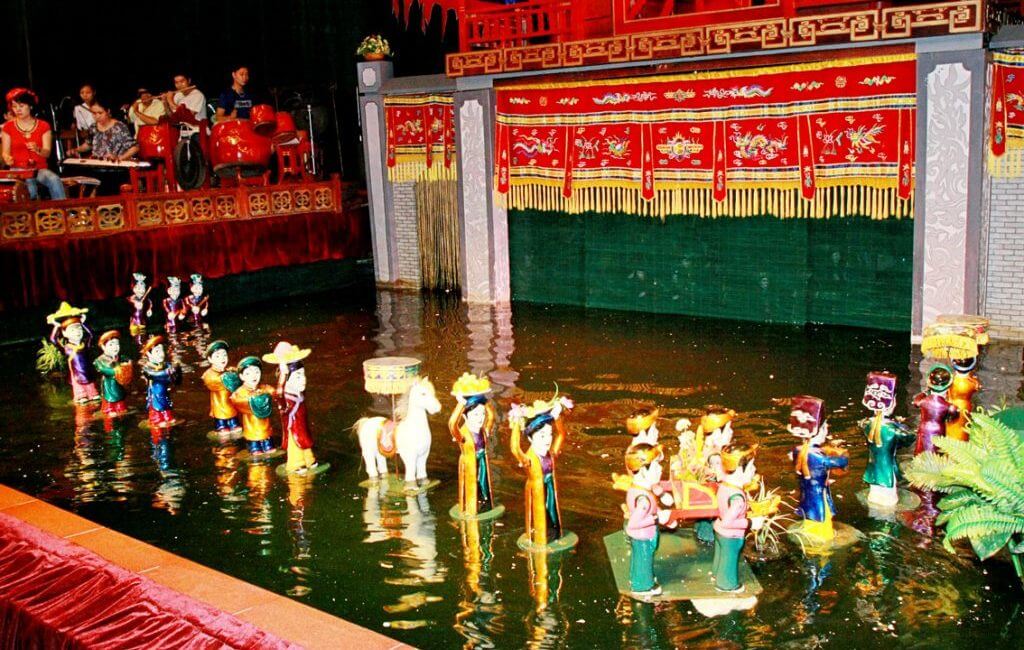
The first time you see a wooden dragon rise out of a pool of water and breathe fire, you don’t quite know what to do—laugh, clap, or just stare.
The stage looks simple enough: a waist-high curtain, a murky pond, a tiled roof overhead. Then the music kicks in—drums thumping, gongs chiming, a piercing two-string fiddle slicing through the air—and suddenly the water comes alive. Farmers, fairies, ducks, and dragons skim across the surface as if propelled by magic.
This is Vietnamese water puppet theater, and it’s been captivating audiences for nearly a thousand years.
Water puppetry, or múa rối nước, dates back to the 11th century in northern Vietnam. Legend has it that during flooding season, when rice paddies overflowed, villagers stood waist-deep in water and entertained one another with wooden puppets.
The flooded fields became the stage. The water hid the mechanics.
That origin story still shapes the art form today. Performances take place over a pool of water, which acts as both backdrop and illusion. Beneath the surface, long bamboo rods and pulley systems guide the lacquered wooden figures.
What looks effortless takes serious strength and precision. Puppeteers stand behind a screen, submerged and out of sight, maneuvering each character with practiced control.
It’s theater, engineering, and folk storytelling rolled into one.
The stories are rooted in everyday Vietnamese life—harvesting rice, fishing, tending buffalo—woven together with mythology and humor.
You’ll meet:
Even without understanding every word of Vietnamese, you’ll follow along. The exaggerated movements, live narration, and vibrant music make the plots easy to grasp.
There’s something refreshingly analog about it. No CGI. No flashy special effects. Just carved wood, rippling water, and centuries of tradition.
The live orchestra is half the experience.
Musicians sit to the side of the stage, playing traditional instruments like drums, wooden bells, bamboo flutes, and the đàn nhị (a two-string fiddle). The rhythm builds suspense, punctuates jokes, and signals dramatic moments.
The singers narrate the action, their voices rising and falling in expressive cadences. It feels intimate—like being let in on a story that’s been told around fires and family tables for generations.
Close your eyes for a second and you’ll hear rural Vietnam: festival drums, market chatter, the pulse of village life.
In cities like Hanoi, water puppet theater has moved from rice paddies to purpose-built theaters. Travelers often catch a show near Hoan Kiem Lake before dinner.
It would be easy to write it off as a tourist attraction. But that misses the point.
Water puppetry is a living tradition. Troupes continue to train young performers. Scripts evolve. New generations add their own energy while honoring the old rhythms.
When the curtain lifts and the first puppet skims across the water, you’re not just watching a performance. You’re witnessing a craft that has survived wars, dynasties, and modern reinvention.
And as the final dragon dips back beneath the surface, leaving ripples behind, you realize something: this isn’t just entertainment.
It’s history—floating right in front of you.
Information
Follow Us
Payment channels